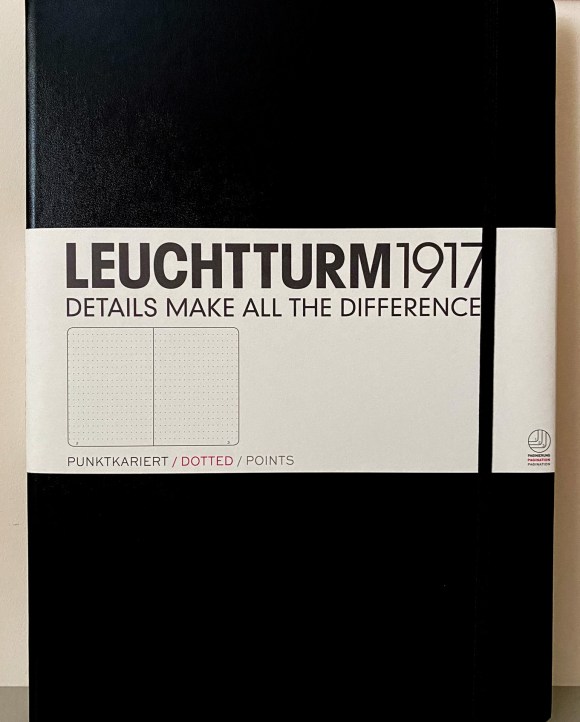
The key to happiness is learning to appreciate the little things in life, like this Leuchtturm 1917 notebook that I’ve just bought for a super secret project of mine.
.. — .-. .- -. | .. -.. .-. .. …
The key to happiness is learning to appreciate the little things in life, like this Leuchtturm 1917 notebook that I’ve just bought for a super secret project of mine.
Wouldn’t it be nice to be able to pop a pill and magically become smarter? Of course it would. In the movie Limitless, struggling writer Edward Morra tries a new nootropic drug called NZT-48 and suddenly turns into a genius. Absolutely brilliant, job done, see you later!
Naturally, things are not so straightforward in real life. A recent study by Cohen et al published in Neurology Clinical Practice (DOI: 10.1212/CPJ.0000000000000960) found that many over-the-counter (OTC) cognitive enhancement supplements also contain unapproved drugs. A supplement to supplement your supplement, if you like. The authors conclude by saying that ‘the health effects of consuming untested combinations of unapproved drugs at unpredictable dosages without clinician oversight in supplements is unknown’ (emphasis mine).
Unfortunately, many people still believe in the power of OTC supplements to boost their cognitive abilities. Why is this so? I think it has to do with our desire to shortcut the process to becoming more intelligent. I mean, who’s got the time to read all these books eh? TL;DR…lukis boleh? Etc.
Let’s make it clear then: if you want to be a smart person, the smartest thing you can do right now is to stop buying all these nonsense supplements. None of them have been shown to work, and you might as well donate the money to a more deserving cause.
So, is there nothing that we can do to train our brains to become smarter?
Of course not. Here are some easy-to-implement suggestions:
1. Get Enough Sleep
In his book ‘Why We Sleep’, neuroscientist Matthew Walker came up with this fictitious advertisement to highlight the benefits of a full night of sleep.
Scientists have discovered a revolutionary new treatment that makes you live longer. It enhances your memory and makes you more creative. It makes you look more attractive. It keeps you slim and lowers food cravings.It protects you from cancer and dementia. It wards off colds and the flu. It lowers your risk of heart attacks and stroke, not to mention diabetes. You’ll even feel happier, less depressed, and less anxious. Are you interested?
Walker goes on to make the point that if this were a drug, people would be paying exorbitant amounts just to get a small dose into their systems. Unlike the claims made by OTC supplements however, all the above statements about sleep can be backed up by solid evidence.
So, why don’t people promote sleep as a treatment for all these conditions?
My guess is because it’s hard to make money from sleep. You can’t sell it, you can’t buy it for others, and worse still, people who are sleeping tend not to be such excellent consumers. Hard to imagine buying things on Shopee or Lazada while you’re fast asleep!
Bear in mind that we’re talking about good quality sleep here. A full night of sleep begins with your pre-sleep ritual. Do you spend an hour browsing through your Facebook/Instagram feeds, or do you switch off all screens and read a book instead? While you’re sleeping, is your phone still buzzing away with all sorts of useless notifications? These things matter when it comes to determining the quality of your sleep.
2. Healthy Body, Healthy Mind
Apart from getting a full night of sleep, you also need to think about your general physical health. Everyone knows what I mean by that: eat a balanced diet, get enough exercise, stop smoking etc. These measures are not controversial, but if you still want some evidence, check out this recent paper by my colleagues Michele Veldsman and Xin-You Tai in Nature Communications (DOI: 10.1038/s41467-020-18201-5) entitled ‘Cerebrovascular risk factors impact frontoparietal network integrity and executive function in healthy ageing’. One of their key findings is that:
…cerebrovascular risk is associated with reduced cerebral grey matter and white matter integrity within a fronto-parietal brain network underlying executive function.
3. Challenge Your Brain
These days, it is easy to just go through life like a mindless zombie. Many forms of entertainment are effectively infinity pools, designed to suck you in and keep you there for as long as possible. As soon as one YouTube video ends, the next one plays automatically. You can never get to the bottom of your Facebook or Twitter feed thanks to infinity scrolling.
It’s time to break the cycle!
We need to be more mindful about what we feed our minds. Instead of refreshing Instagram for the millionth time, why not try something more cognitively demanding?
Read a good book, solve some Sudoku puzzles, join a really good discussion about current affairs, switch off Google Maps and try to navigate manually, there are endless possibilities for giving your brain a really good challenge.
For Muslims, here’s my personal suggestion: try to memorise the Quran. Whether you get there in the end (i.e. whether you actually manage to memorise all of it) doesn’t really matter. What matters is your effort and ‘istiqamah‘ in doing so. Progress, not perfection. That way, you get to do something cognitively demanding, and spiritually rewarding at the same time.
4. Connect With Others
Last but not least, try to maintain healthy, meaningful connections with others. One of the greatest ironies in today’s world is that we are more connected than ever (thanks to social media) but increasingly becoming more distant from each other.
Most of our relationships are very superficial, reduced to mere ‘Likes’ on Facebook or Instagram. We often know what random celebrities had for breakfast, but don’t even realise that a friend or relative is suffering a serious illness.
How does maintaining healthy relationships make us smarter?
Part of it is the psychological benefit of having a good support network. Part of it is the physical well-being you get from doing various activities together. And a large part of it, I believe, is due to the complex, intricate, delicate nature of human relationships, one that can never be replaced by social media stardom.
It reminds me of this scene from Inception (one of the best movies of all time, by the way) in which Dominick “Dom” Cobb finally makes peace with his guilt over the death of his wife Mal:
Mal: I’m the only thing you do believe in anymore.
Dom: I wish. I wish more than anything, but…I can’t imagine you with all your complexity, all your perfection, all your imperfection. Look at you. You’re just a shade. You’re just a shade of my real wife. And you were the best that I could do, but…I’m sorry, you’re just not good enough.
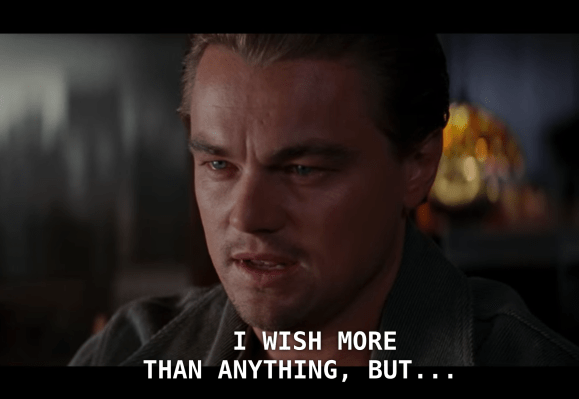
I’m not crying, you’re crying. Damn ninjas cutting onions!
So, in summary:

Location: Magdalen Bridge, Oxford
Fancy going punting in the rain? Guess not.
From Kottke.org:
The winning entries from the Insight Investment Astronomy Photographer of the Year 2020 competition are here and they are spectacular.
Spectacular doesn’t even begin to describe some of these images!
Here’s my absolute favourite:

This image, entitled ‘Questions’, was taken by New Zealand based photographer Paul Wilson. (Check out his other photos by the way, they are simply mind-blowing!)
Looking at the galaxies above us, one cannot help but wonder how all of this came into existence. All this beauty in the universe, all this majesty, surely it must exist for a reason. I know this is a deeply personal question, one that depends, to a large extent, on your faith and how you view the world around you. For me though, the answer is clear.
The Holy Quran states:
There truly are signs in the creation of the heavens and earth, and in the alternation of night and day, for those with understanding, who remember God standing, sitting, and lying down, who reflect on the creation of the heavens and earth: ‘Our Lord! You have not created all this without purpose—You are far above that!—so protect us from the torment of the Fire.’
Surah Ali-Imran [3:190-191]

Near to this site stood the King’s houses later known as Beaumont Palace
King Richard I was born here in 1157 and King John in 1167
If you walk down Beaumont Street from the Ashmolean Museum towards Worcester College, you may come across a small pillar near the junction with Walton Street. It’s partly hidden by bushes, but you can just about see it in the image from Google Street View below (on the right side of the picture, next to the man walking on the pavement):
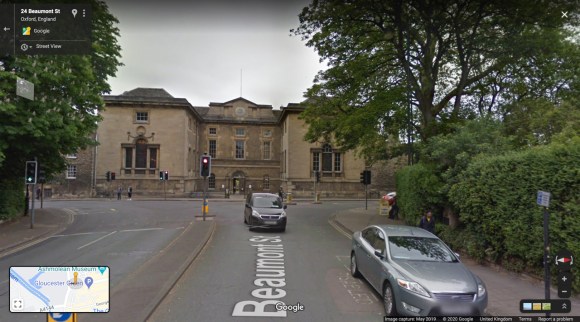
Originally built in the early 12th century by Henry I outside the north gate of Oxford, Beaumont Palace was partly dismantled following the Reformation. What remains of the palace was eventually torn down in the laying out of Beaumont Street in 1829.
All that’s left now is a pillar, and memories of times long past.

